Humanity at the Edge of the Cosmos: Why Space Still Calls to Us
newsora.sbs >> Science & Space>> Humanity at the Edge of the Cosmos: Why Space Still Calls to Us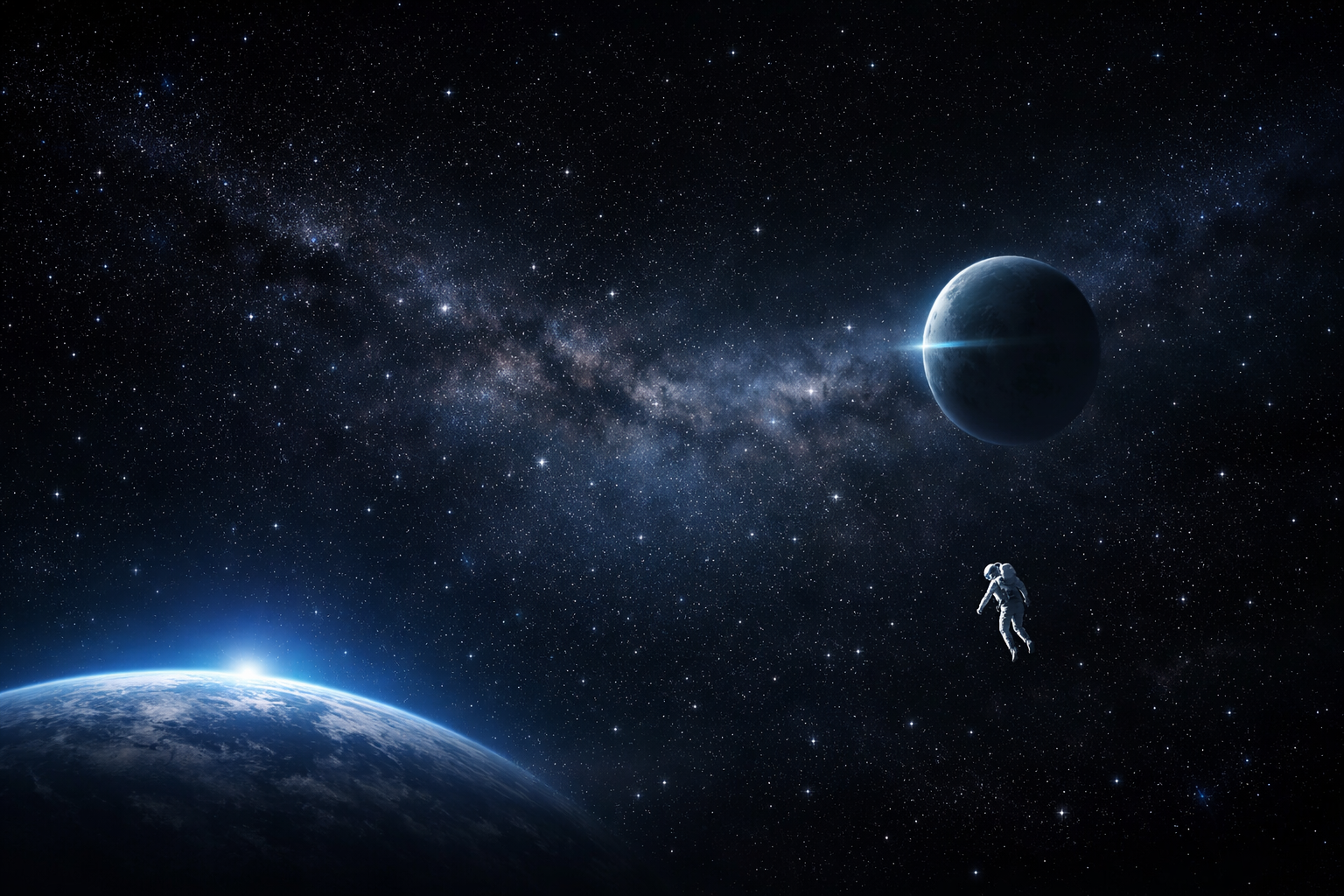
Humanity at the Edge of the Cosmos: Why Space Still Calls to Us
When we look up at the night sky, we’re not just seeing stars—we’re seeing history, mystery, and possibility layered across unimaginable distances. From the soft blue glow of Earth to distant planets wrapped in alien atmospheres, space continues to awaken a deep sense of wonder that no other frontier can match.
Earth: A Fragile Beacon in the Dark
Seen from space, Earth is both powerful and delicate. Its glowing oceans and thin atmospheric shell remind us how rare life may be in the vast cosmic ocean. This perspective has reshaped how humanity views itself—not as the center of the universe, but as caretakers of a small, extraordinary world drifting through darkness.
The Astronaut’s View: Silence and Perspective
Floating above the planet, astronauts often describe space as profoundly quiet and deeply emotional. Without borders or noise, Earth becomes a single living system. That experience has inspired generations of scientists, engineers, and dreamers to look beyond daily concerns and think in planetary—and even cosmic—terms.
Distant Worlds and the Search for Life
With every new telescope and mission, we discover planets orbiting far-off stars, some wrapped in blue atmospheres that hint at water and potential life. These discoveries raise timeless questions:
- Are we alone?
- Is life common—or incredibly rare?
- What might we become if we reach beyond our solar system?
Each new exoplanet is not just a scientific data point, but a mirror reflecting our own curiosity and hope.
Technology as a Bridge to the Unknown
Modern space exploration is no longer just about rockets and astronauts. Artificial intelligence, robotics, and advanced imaging allow us to explore farther than ever before. Probes travel where humans cannot, sending back images that blur the line between science and art—vast nebulae, glowing galaxies, and planets bathed in alien light.
Why Space Exploration Still Matters
In an age of rapid change on Earth, space offers perspective. It reminds us that innovation thrives on curiosity, that cooperation can cross borders, and that discovery is part of what makes us human. Exploring space is not an escape from our world—it’s a way to better understand our place within it.
Looking Forward
As humanity stands on the edge of deeper exploration—returning to the Moon, reaching Mars, and scanning distant stars—the question is no longer if we will explore further, but how. With care, imagination, and responsibility, the cosmos may become not just something we observe, but something we understand.
And perhaps one day, that distant blue planet in the sky won’t feel quite so distant anymore.