Life in Space: Exploring the Possibility Beyond Earth
newsora.sbs >> Science & Space>> Life in Space: Exploring the Possibility Beyond Earth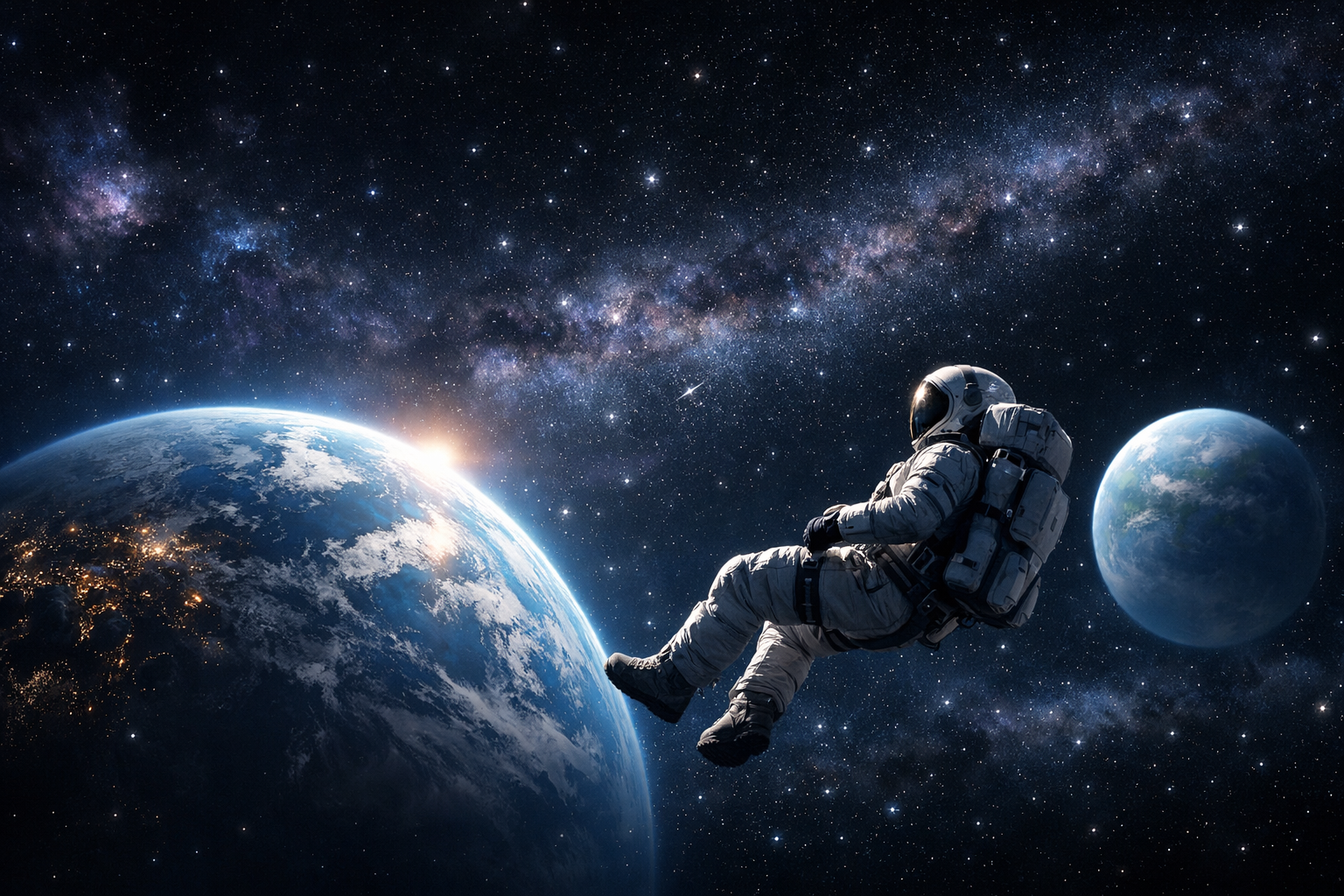
Life in Space: Exploring the Possibility Beyond Earth
The idea of life in space has fascinated humans for centuries. From ancient stargazers to modern scientists, one question continues to spark curiosity: Are we alone in the universe? With rapid advancements in space technology and astronomy, the search for life beyond Earth has become more active and promising than ever.
What Does “Life in Space” Mean?
Life in space refers to the possibility that living organisms exist outside Earth, either on other planets, moons, or elsewhere in the universe. Scientists look for microbial life, such as bacteria, as well as more complex life forms that could survive in extreme environments.
Why Do Scientists Believe Life May Exist in Space?
Several factors support the idea that life could exist beyond Earth:
🌌 A Vast Universe
The universe contains billions of galaxies, each with billions of stars and planets. With such enormous scale, scientists believe it is statistically likely that life exists somewhere else.
💧 Presence of Water
Water is essential for life as we know it. Recent discoveries have confirmed the presence of water or ice on planets and moons such as Mars, Europa (moon of Jupiter), and Enceladus (moon of Saturn).
🧬 Survival in Extreme Conditions
On Earth, microorganisms thrive in extreme environments like deep oceans, volcanoes, and frozen regions. These discoveries suggest that life could also survive harsh conditions in space.
Planets and Moons That May Support Life
🔴 Mars
Mars is one of the most studied planets in the search for extraterrestrial life. Evidence of ancient riverbeds and underground ice suggests that Mars once had conditions suitable for life.
🌊 Europa
Europa has a vast ocean beneath its icy surface. Scientists believe this ocean could provide the right conditions for microbial life.
🌟 Exoplanets
Exoplanets are planets outside our solar system. Some lie in the habitable zone, where temperatures allow liquid water to exist.
Challenges of Life in Space
Living in space is extremely difficult due to:
- Lack of oxygen
- Extreme temperatures
- High radiation levels
- Low gravity
These challenges make it hard for humans and other organisms to survive without advanced technology.
Human Life in Space
Astronauts aboard the International Space Station (ISS) already live in space for months. They rely on:
- Artificial oxygen and water recycling
- Special diets
- Exercise to counter muscle and bone loss
These missions help scientists understand how long-term space travel may affect the human body.
The Future of Space Life Exploration
Space agencies like NASA, ESA, and ISRO are planning missions to explore Mars, distant moons, and exoplanets. Future goals include:
- Sending humans to Mars
- Searching for biosignatures
- Establishing space habitats
These efforts may one day confirm whether life truly exists beyond Earth.
Conclusion
The search for life in space is one of humanity’s greatest scientific quests. While no direct evidence of extraterrestrial life has been found yet, ongoing discoveries continue to fuel hope and curiosity. As technology advances, the answer to this cosmic mystery may be closer than we think.